Overview
What is ADX — Average Directional Index?
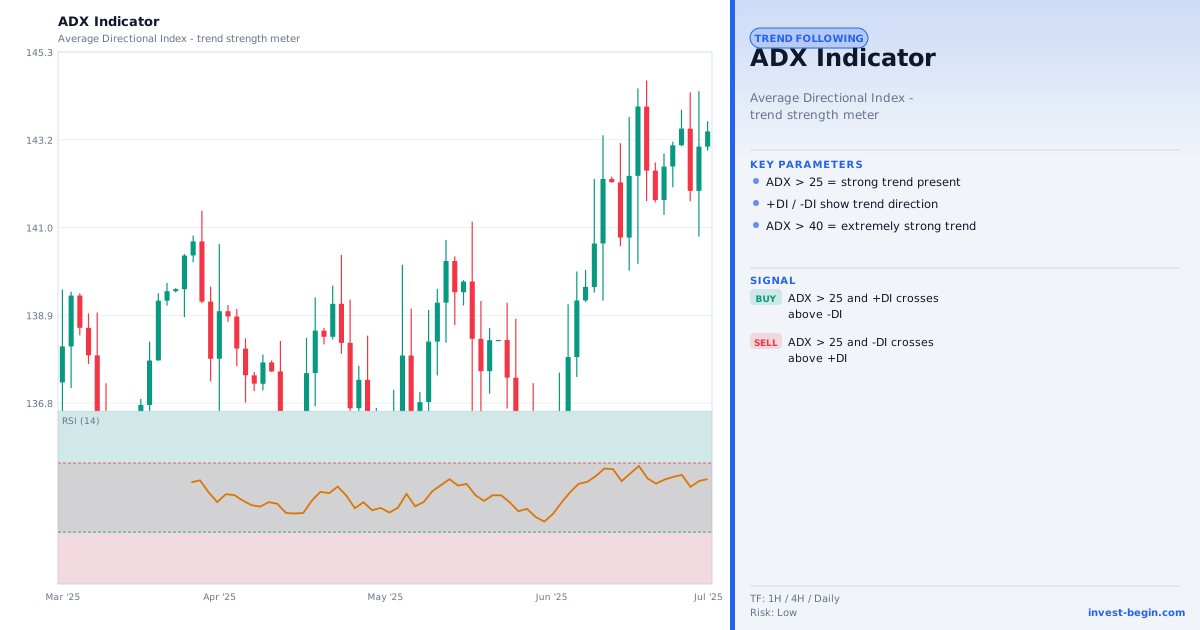
The Average Directional Index (ADX) is a trend strength indicator, also developed by J. Welles Wilder Jr., that measures how strong a trend is — regardless of direction. It is always plotted alongside two directional movement lines: +DI (positive directional indicator) and −DI (negative directional indicator).
ADX values range from 0 to 100. A reading below 20 indicates a weak or absent trend (range-bound market). Values between 20–25 mark the beginning of a trend. Above 25 indicates a strong trend; above 40 signals a very strong trend; above 50 is rare and indicates an extremely powerful move.
The key insight is that trend-following strategies (moving average crossovers, breakouts) perform poorly in markets with low ADX. Adding an ADX > 25 filter dramatically reduces false signals. Conversely, mean-reversion strategies work best when ADX is below 20.
The +DI/−DI crossover provides directional signals: when +DI crosses above −DI, the market is strengthening upward; the reverse for downward moves. Combined with the ADX reading, this creates a three-part signal: ADX is rising (trend is strengthening), +DI > −DI (bullish), ADX > 25 (trend is valid).