Pine Script (TradingView)
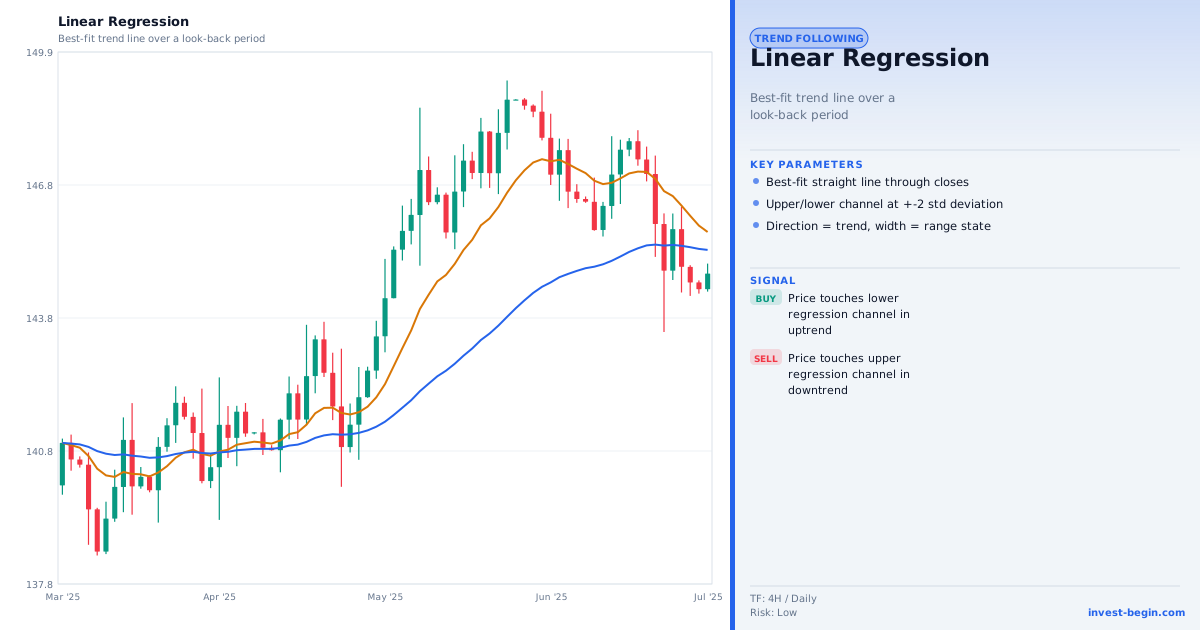
This is a TradingView Pine Script example for this indicator. Paste it into the TradingView Pine Editor, add it to your chart, and adjust inputs for your market and timeframe.
//@version=6
indicator("Linear Regression Channel", overlay=true)
length = input.int(50, "Regression Length")
mult   = input.float(2.0, "Channel Std Dev")
lr     = ta.linreg(close, length, 0)
dev    = mult * ta.stdev(close, length)
upper  = lr + dev
lower  = lr - dev
longSignal  = ta.crossover(close, lower) and close < lr
shortSignal = ta.crossunder(close, upper) and close > lr
plotshape(longSignal,  style=shape.triangleup,   location=location.belowbar, color=color.green, size=size.small)
plotshape(shortSignal, style=shape.triangledown, location=location.abovebar, color=color.red,   size=size.small)
plot(lr,    "Regression", color=color.orange)
plot(upper, "Upper",      color=color.new(color.teal, 0))
plot(lower, "Lower",      color=color.new(color.teal, 0))