Overview
What is Volatility Trading Strategy?
Volatility trading is a category of strategies that aims to profit not from the direction of price movement, but from changes in the level of volatility itself. Markets oscillate between periods of calm (low volatility) and turbulence (high volatility), and these cycles are as predictable as price trends — if you know how to read them.
At the core of volatility analysis is the VIX (Volatility Index), which measures the implied volatility of S&P 500 options and is widely known as the "fear gauge." A rising VIX signals increasing uncertainty and tends to coincide with equity market declines; a falling VIX indicates complacency and often correlates with rallies. Extreme VIX readings — above 30 for stocks, or equivalent extremes in crypto volatility indices — historically represent panic bottoms that offer high-probability long equity entry points.
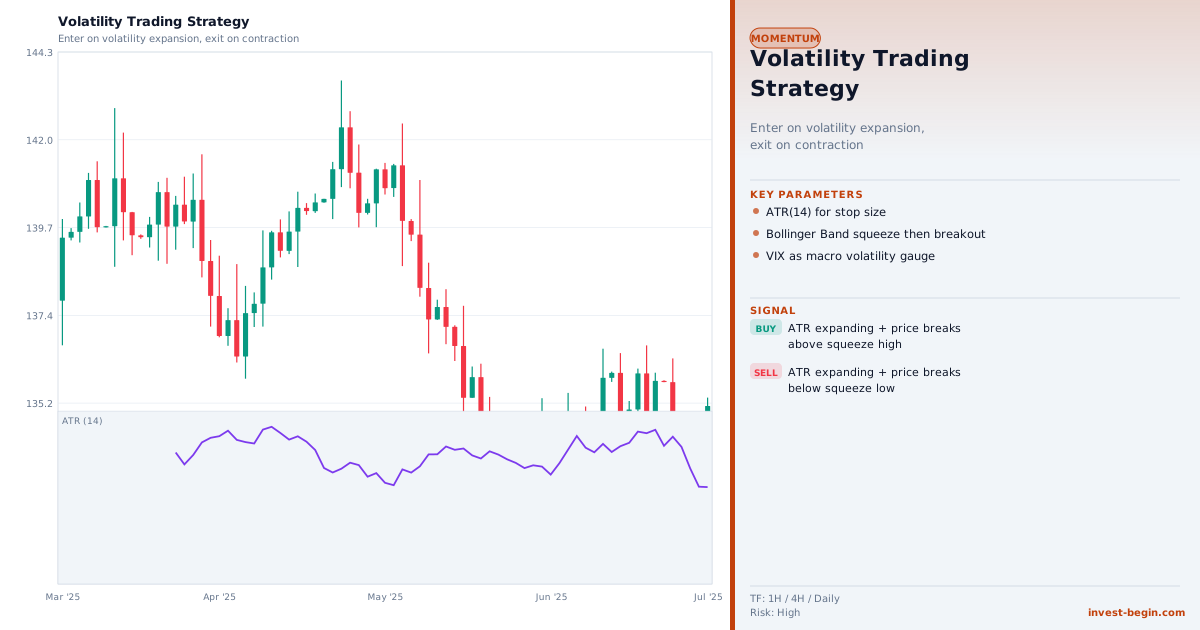
The Bollinger Band Squeeze is a practical volatility-based strategy for all asset classes: when Bollinger Bands narrow to historically tight widths, volatility has compressed to an extreme. This compression precedes an explosive directional move. Traders set breakout orders above and below the squeeze and enter whichever direction the first decisive breakout occurs, using the ATR at the time of breakout for position sizing.
Volatility-adjusted position sizing is another application: during high-volatility regimes (ATR above its 20-period average), reduce position sizes to maintain constant dollar risk. During low-volatility regimes, increase size. This systematic approach prevents large losses during market crashes and maximises gains during calm, trending periods.
In crypto markets, perpetual futures funding rates are closely linked to volatility: during high-volatility bull runs, funding rates become extremely elevated, making short-perpetual / long-spot carry trades highly lucrative. Monitoring volatility provides context for choosing between directional and carry strategies.