Overview
What is Mean Reversion Strategy?
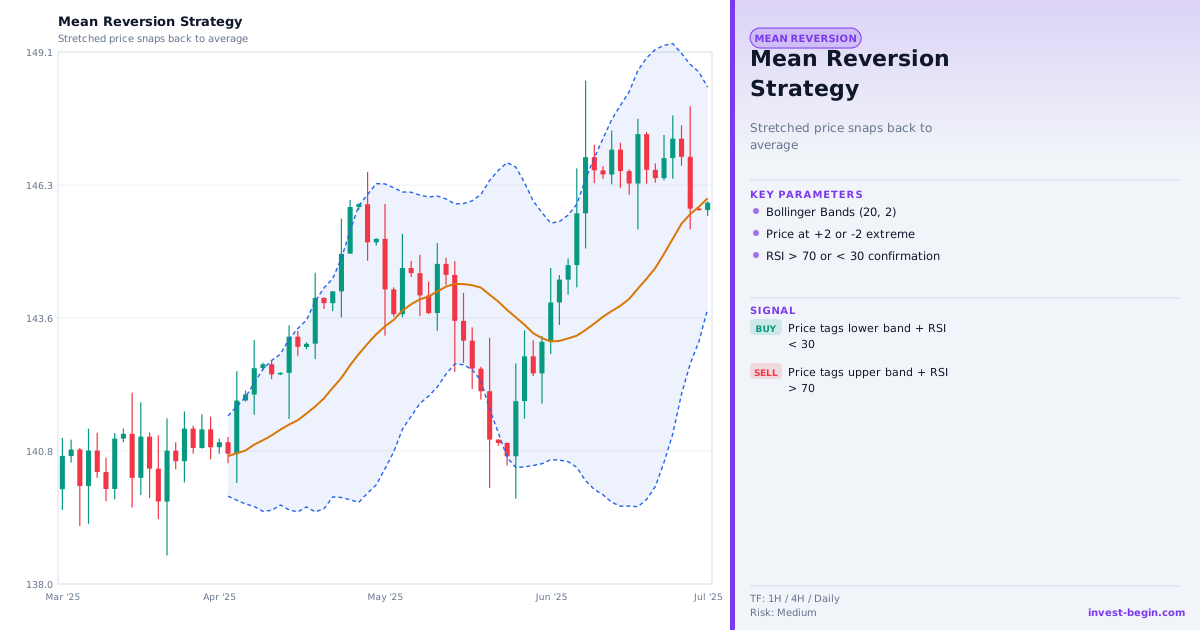
Mean reversion is based on the statistical observation that extreme price deviations from a long-run average tend to be temporary. Just as a stretched rubber band snaps back, overextended prices tend to return to their mean over time. This principle is especially reliable in markets that exhibit stationary or co-integrated behaviour.
The strategy involves identifying when price has moved significantly away from a measure of central tendency — such as a moving average, the VWAP, or a regression line — and taking a position anticipating the return. Common entry triggers include price crossing more than two standard deviations outside a Bollinger Band, an RSI reading above 70 or below 30, or a Z-score exceeding ±2 on a rolling regression.
Risk management is critical in mean reversion: the strategy can suffer large losses if a trending market extends far beyond expected bounds. Position sizing must account for the possibility of further extension before reversal. Traders often scale into positions as price moves further from the mean (pyramiding into a contrarian trade) and use wide stops to avoid premature exit.
Mean reversion works best in range-bound equity markets, currency pairs with long-term equilibrium rates, and in pair trading where two co-integrated assets temporarily diverge.