Overview
What is Moving Average Crossover Strategy?
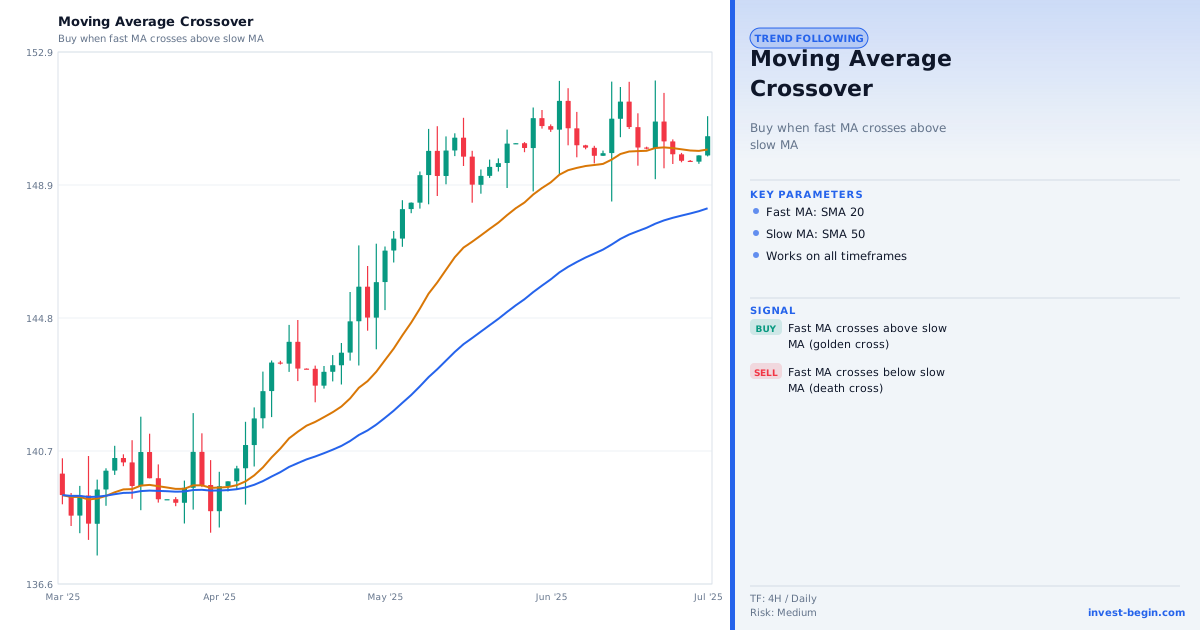
The moving average crossover is among the most widely taught trend-following strategies in technical analysis. The core idea is straightforward: you plot two moving averages of different lengths on a price chart and generate a trade signal whenever the faster average crosses above or below the slower one.
A bullish crossover — sometimes called a "golden cross" when the 50-day MA crosses above the 200-day MA — occurs when the short-period average rises above the long-period average. This indicates that recent prices are climbing faster than the longer-term trend and is interpreted as a buy signal. The opposite, a bearish or "death cross", occurs when the short-period average falls below the long-period average.
Popular combinations include the 5/20 pair for intraday trading, the 20/50 pair for swing trading, and the 50/200 pair for longer-term position trading. The choice of periods affects the sensitivity of the signals: shorter periods generate more signals with more false positives, while longer periods are slower to react but tend to produce cleaner signals.
The main limitation of the strategy is that it is a lagging indicator — by definition, a crossover can only occur after price has already moved. In ranging markets, this can lead to repeated whipsaws. Traders typically add a filter such as a volume confirmation or an ADX reading above 25 to avoid trading crossovers in low-volatility, directionless markets.
auto-Trading allows you to automate crossover strategies using the no-code strategy builder. You simply select two EMA or SMA blocks, wire them into a crossover condition block, and attach a buy or sell action — no programming required.