Overview
What is Wyckoff Method?
Richard Wyckoff was a pioneer of technical analysis in the early 20th century. Working as a stockbroker and publisher in the 1910s-1930s, he had unparalleled insight into how large operators — institutions and market makers — accumulated and distributed large positions without moving markets adversely. He distilled these observations into a coherent framework still used by sophisticated traders today.
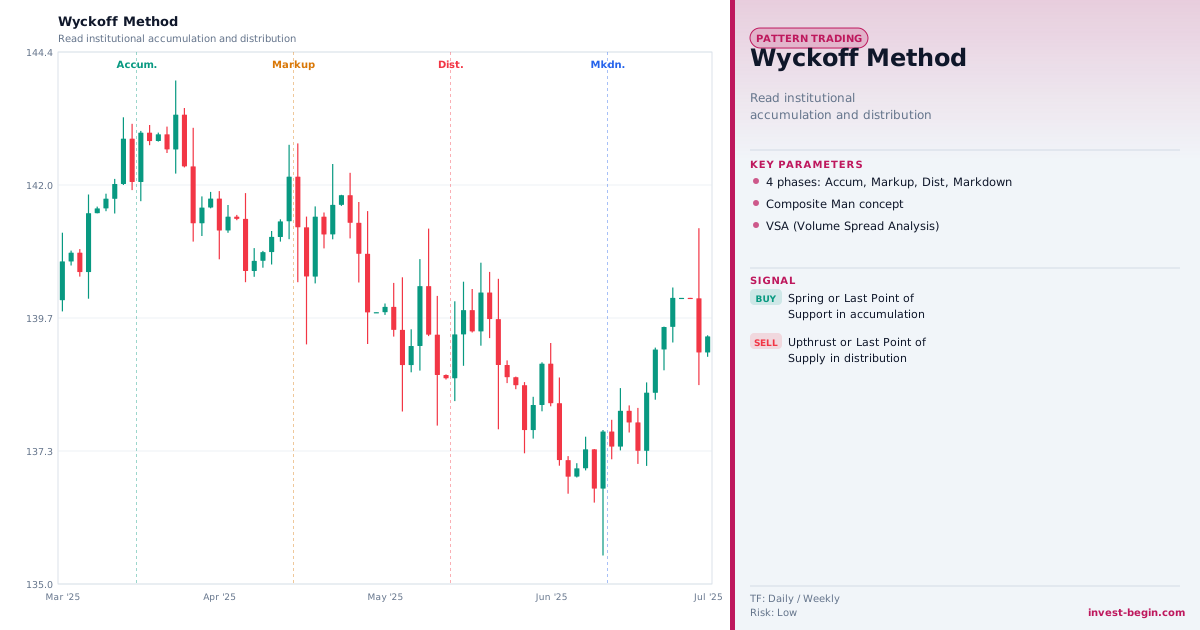
The Wyckoff Method identifies four phases of market behavior: Accumulation (large operators quietly buying while retail sells), Markup (the resulting uptrend), Distribution (large operators selling into retail demand near the top), and Markdown (the resulting downtrend). Each phase contains identifiable sub-events such as Preliminary Support, Selling Climax, Automatic Rally, Secondary Test, Spring, and Sign of Strength for accumulation schematics.
The "Spring" — a false breakdown below support that shakes out weak hands before the markup phase — is one of the most tradable Wyckoff events. It looks like a breakdown but is actually a final shakeout by institutions before a significant move higher. Confirmation comes from increased volume and a rapid recovery above the support level.
Wyckoff's three laws — Supply and Demand, Cause and Effect, and Effort vs. Result — provide a logical framework for understanding why markets move, not just how. The Cause and Effect law is particularly powerful: the larger the accumulation (cause), the greater the eventual markup (effect). This allows estimation of price targets using Point and Figure charts.